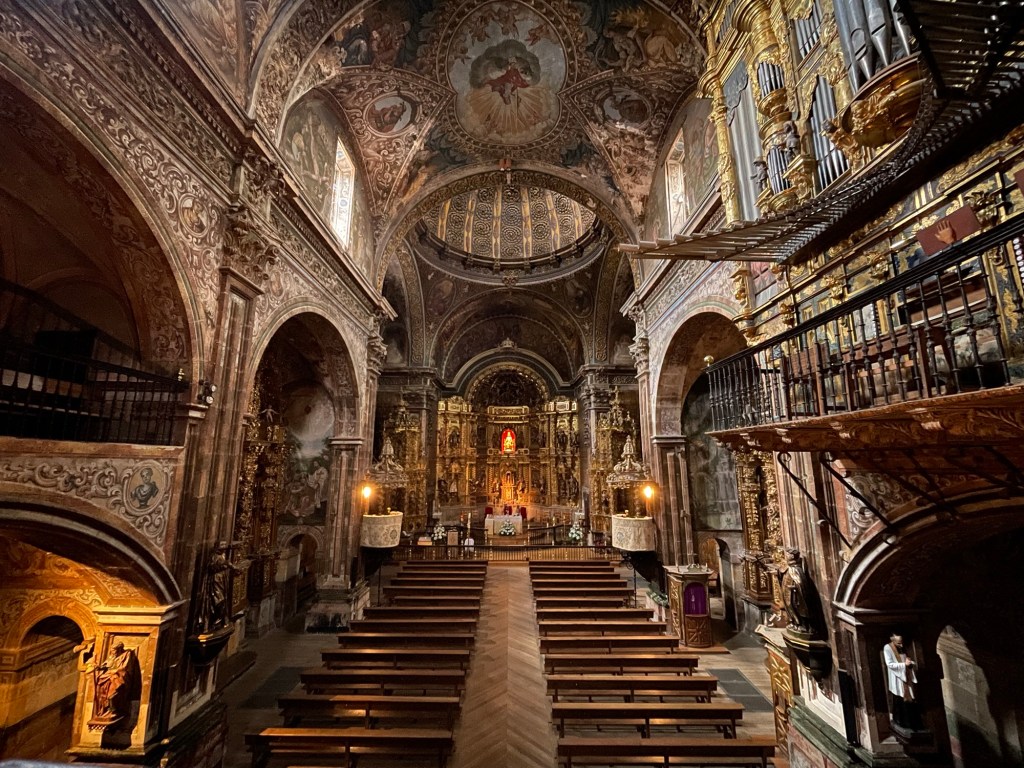
• Santiago

    There’s a point in a long-distance backpacking trip where the novelty of the affair wears off and hiking begins to feel more like a job than a vacation. For me, this change hits at about the two-week mark. Not that I mind. Pushing through the boredom and monotony is type-two fun, and I’m, if anything, a type-two fun kind of guy. It’s just not good for journaling.
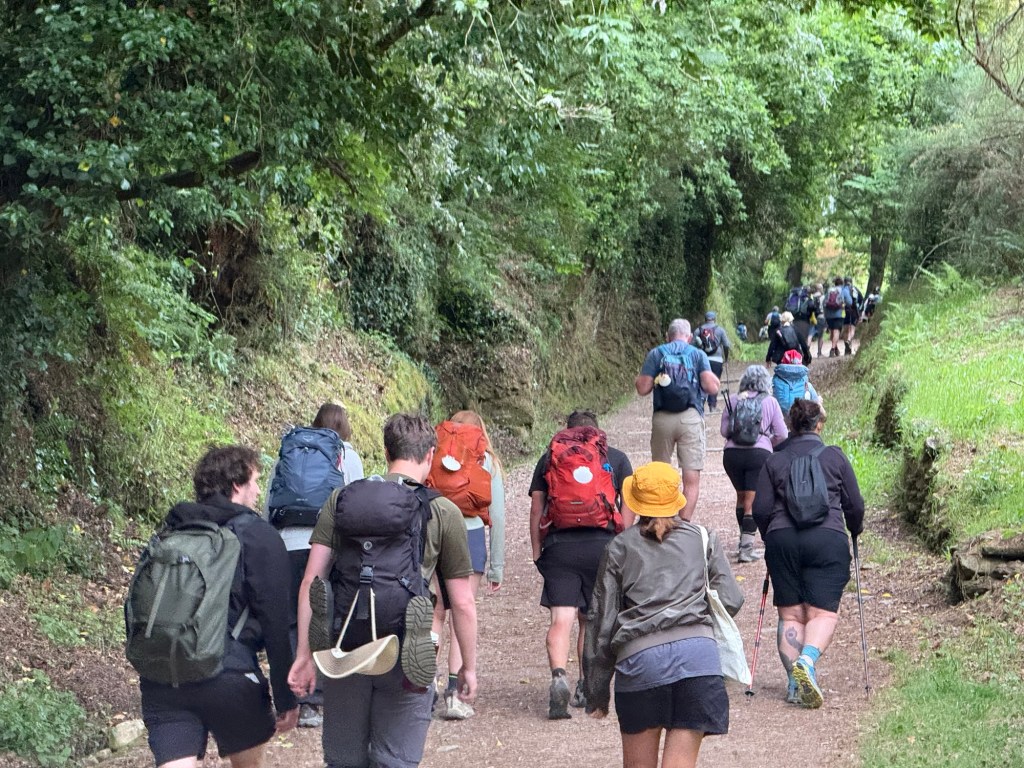
    Since pilgrims are only required to walk 100km to obtain a Compostela from the church, the last few days can feel like a zoo.

    Now that I’ve excused my absence, the day’s hike from Leon to Astorga marked the end of the Maseta and the return to the mountains and hills. At this point in the hike, the terrain does not matter much to me. I’m more or less on autopilot for the rest of the summer.
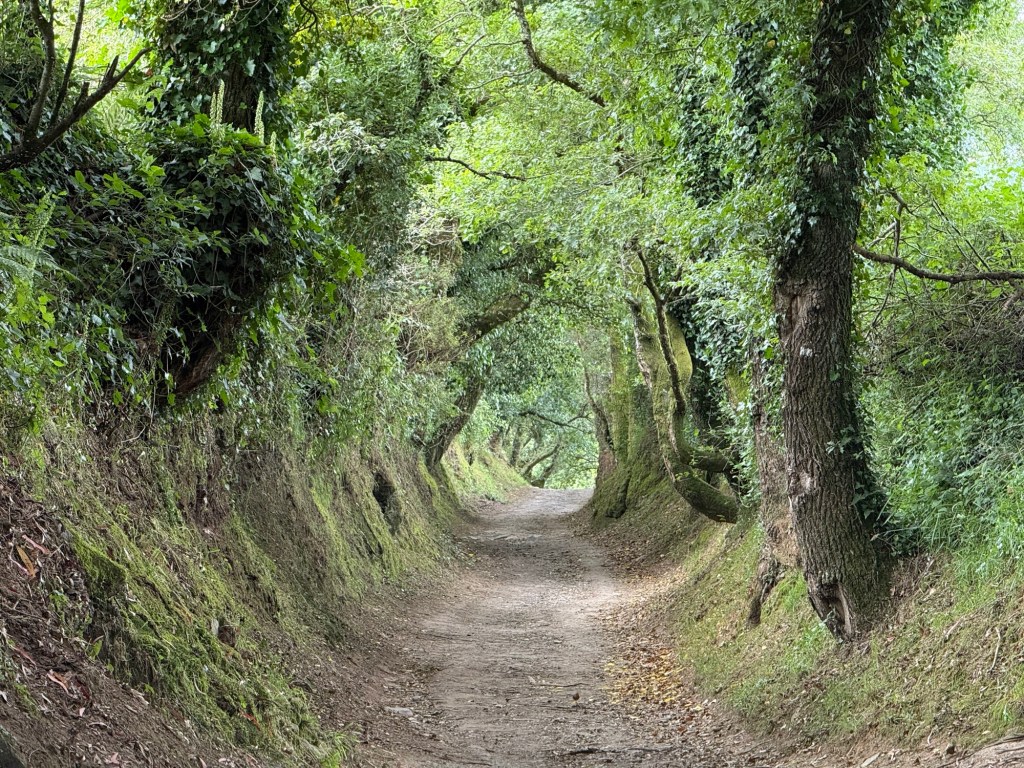
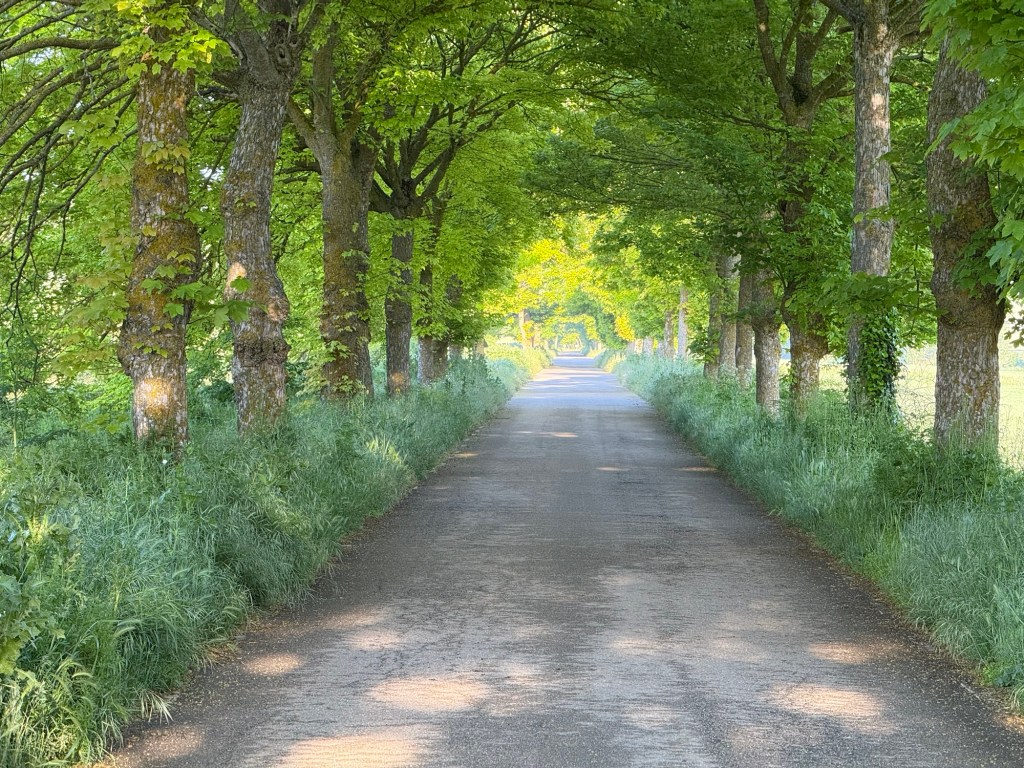
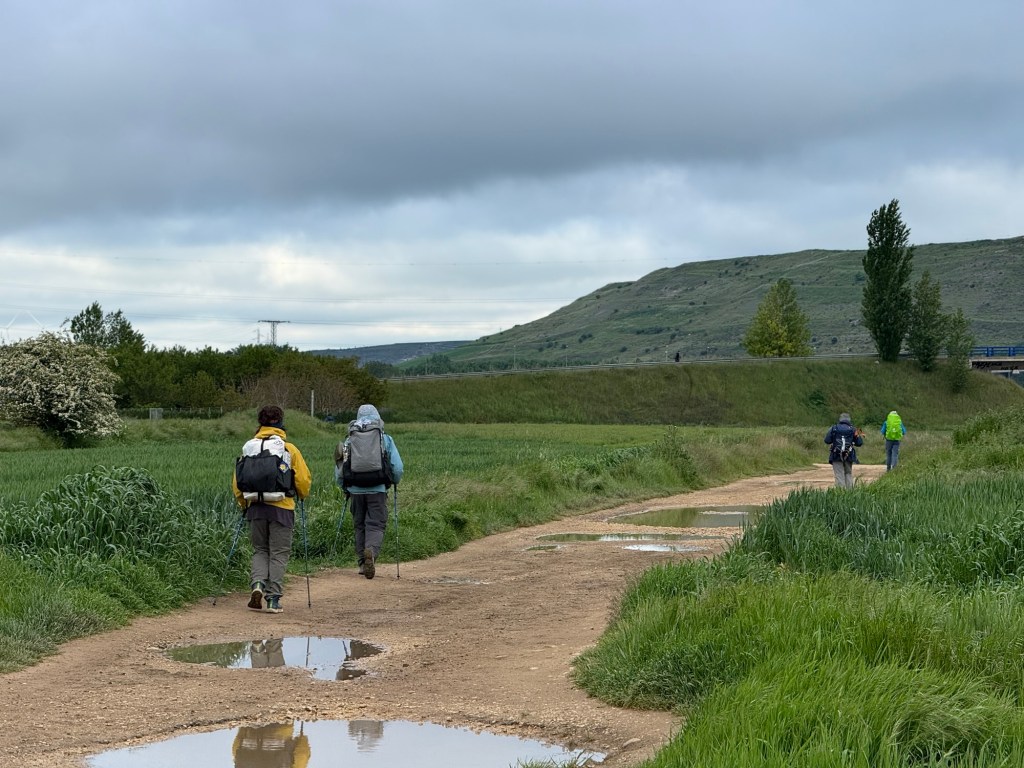
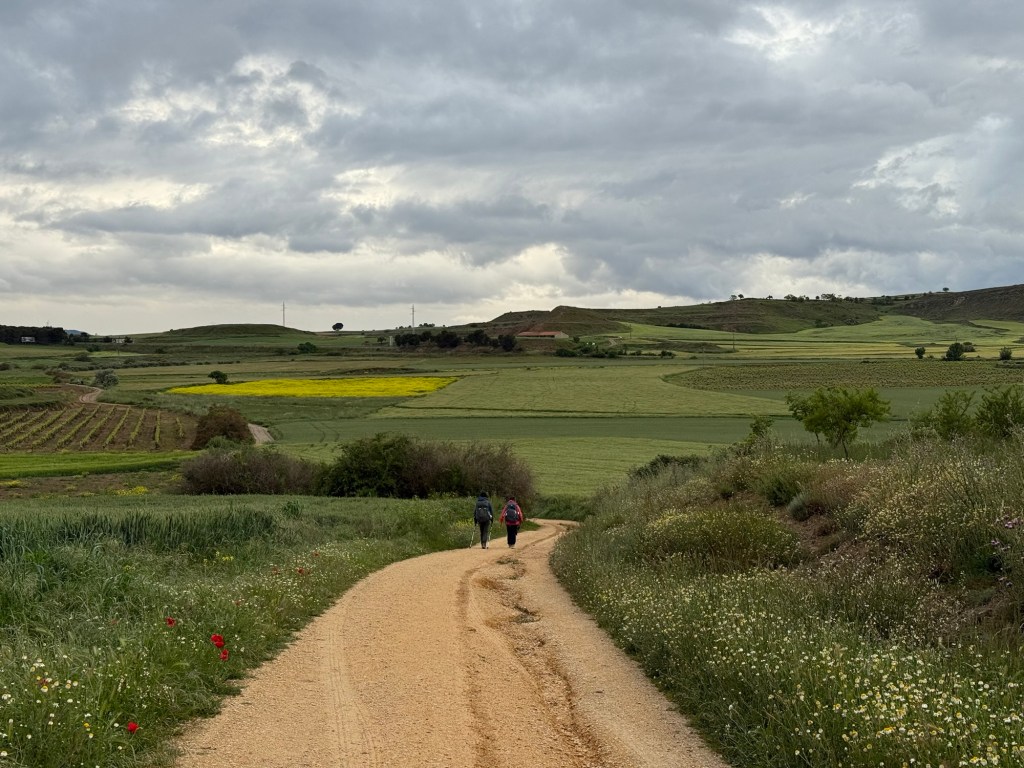
    The trail through the mountains can be pretty at times.

    It took me another nine days to reach Santiago. My notes from those days don’t include anything noteworthy, but there’s always the food.

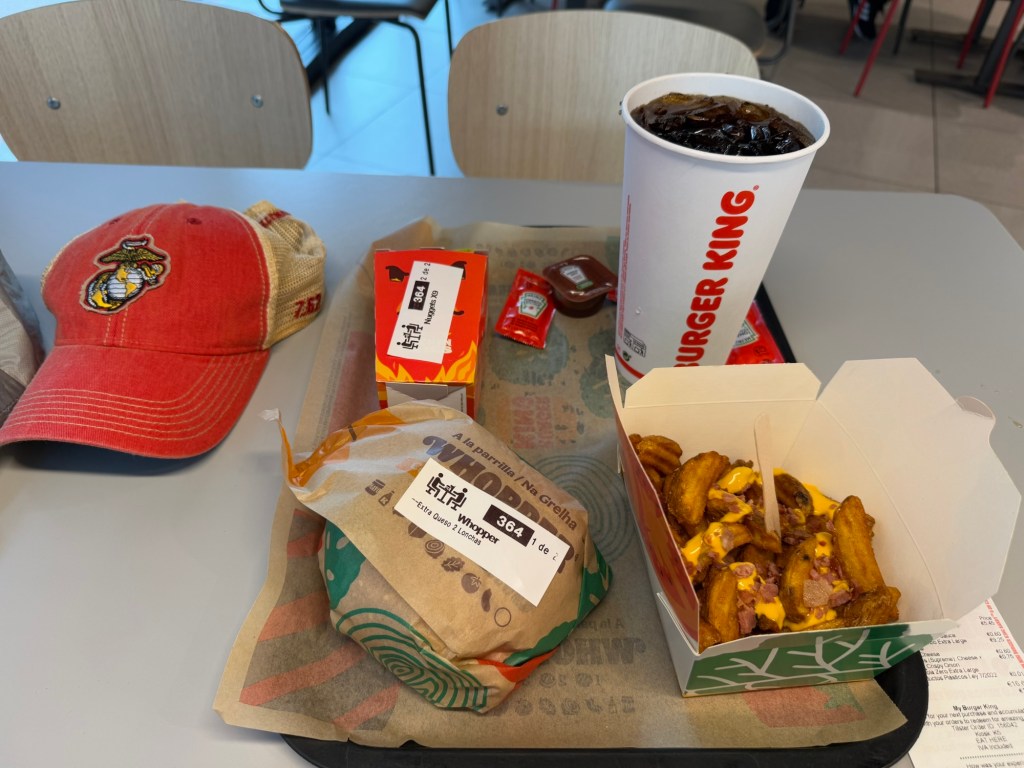
    When I travel anywhere outside the U.S., I always make it a point to sniff out a KFC. While it may sound like heresy for an American to eat American fast food abroad, I promise in this case it’s excusable.

    KFC’s Zinger is one of the best-selling chicken sandwiches in the world. Probably second only to McDonalds’ McChicken. As best I can tell, they marinate the chicken breast in hot sauce and then bread it in the Colonel’s 11 herbs and spices. Add iceberg lettuce, mayo and a pedestrian burger bun, and you have one of the greatest creations to grace the face of the earth. And do you know the only country on earth where KFC doesn’t sell the Zinger? The United States of America.

    Imagine my shock when I rolled into the Santiago mall food court only to discover that KFC no longer sells the Zinger in Spain. It was a terrible and heartbreaking end the hike.
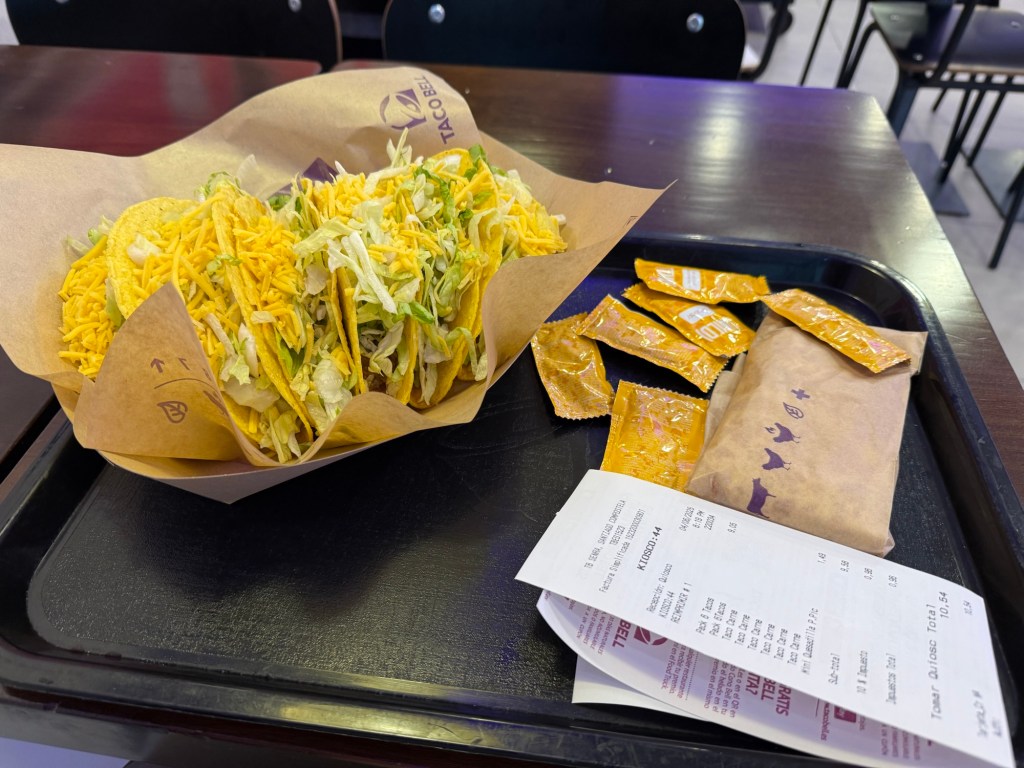
    I settled for six hard tacos from Taco Bell

    The consolation prize was that I’d had one of the best pesto pasta dishes of my life a few day earlier in Portomarin. I’ll have dreams about that meal.
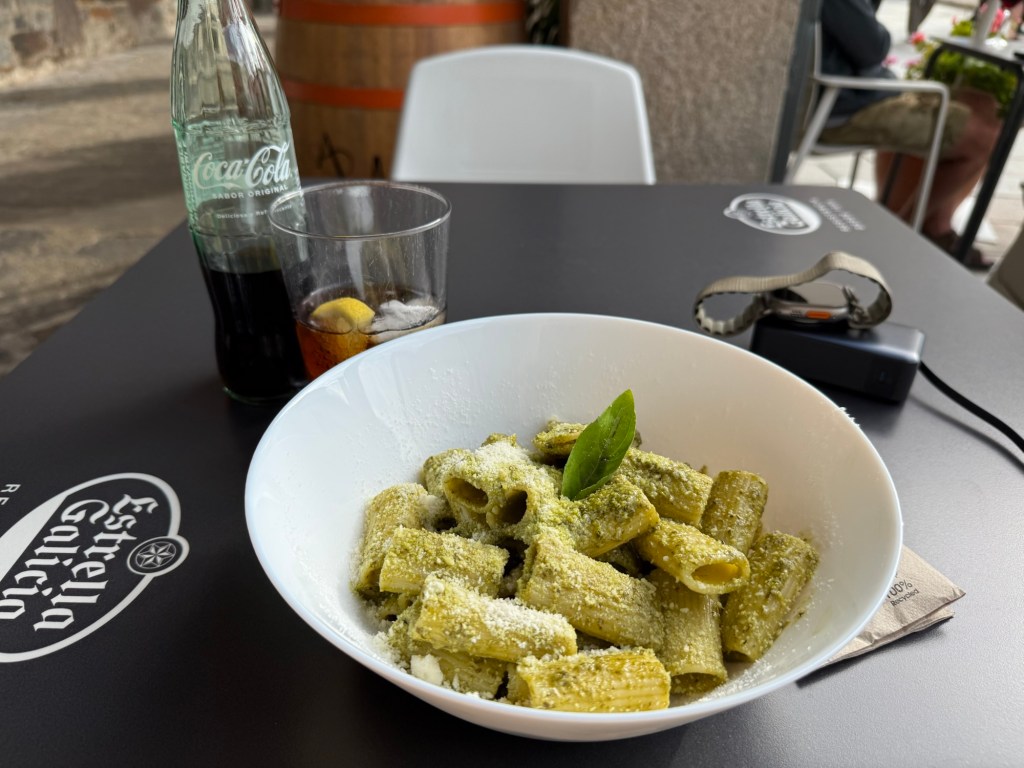
    Best pesto ever.

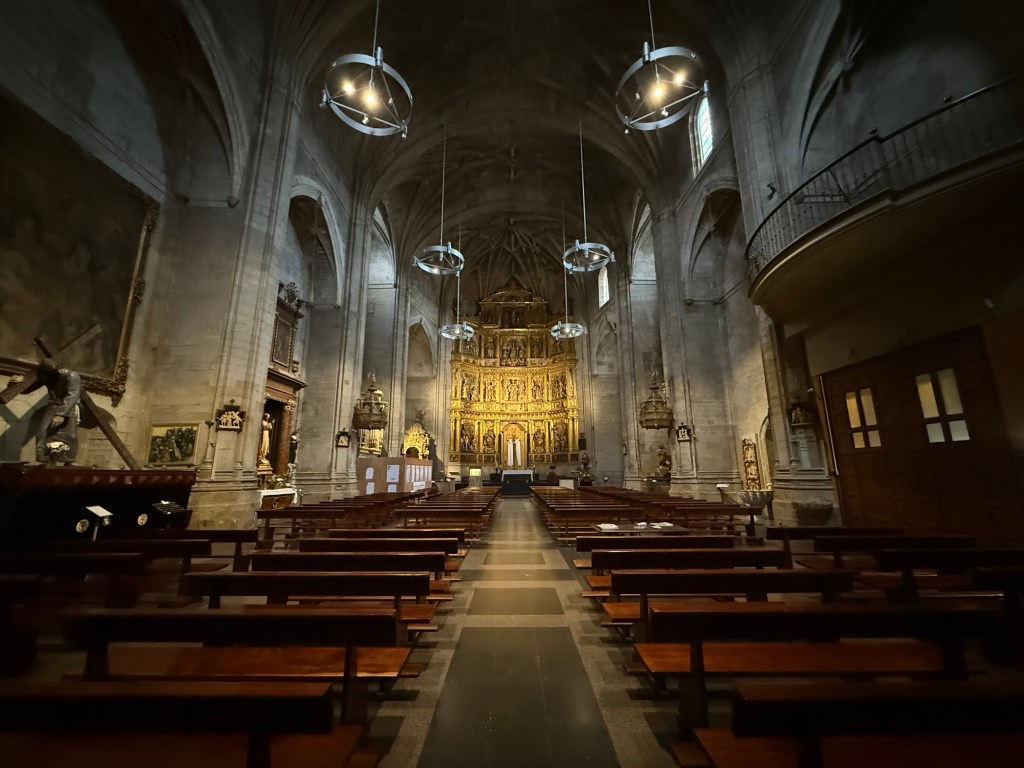
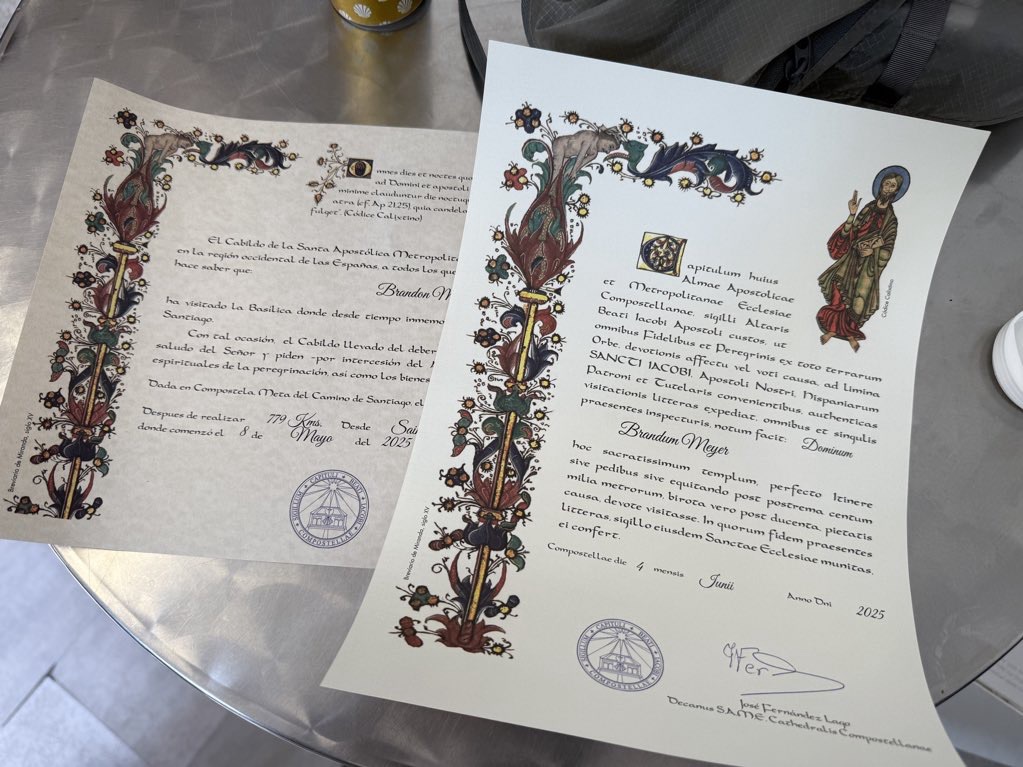
    This visit to Santiago was about as unimpressive as it gets. After checking into the same hostel I’ve stayed at twice before, I took a shower, got a haircut, obtained my compostela from the pilgrim’s office and went to bed. I didn’t even make it to the church.
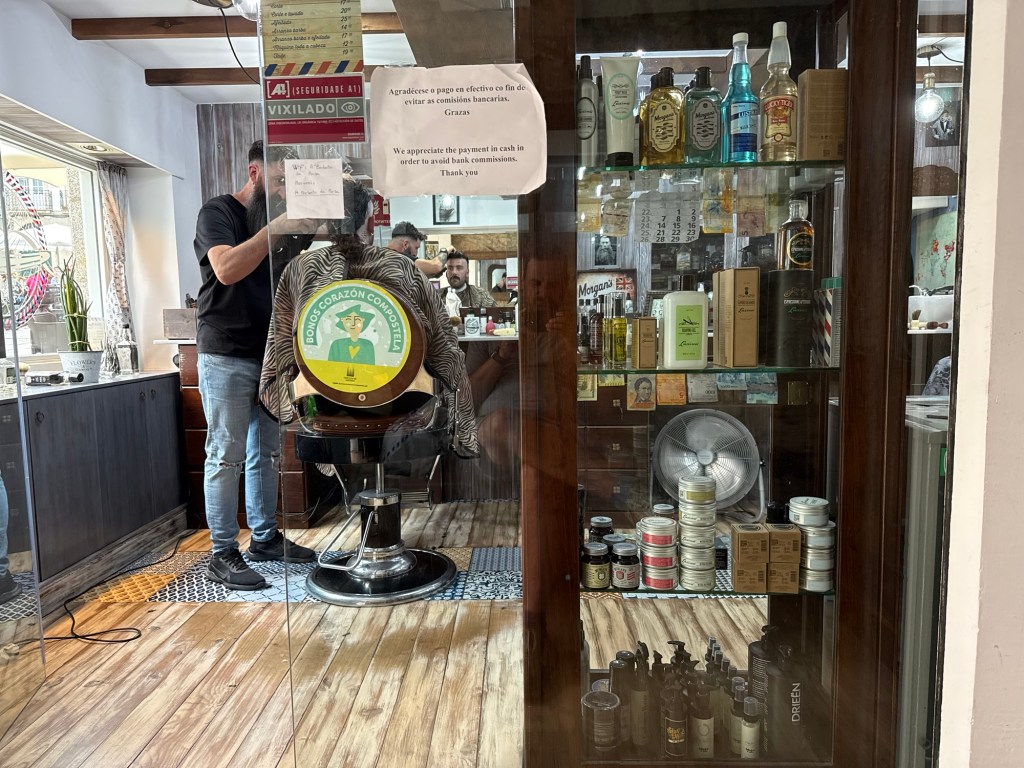
    Classy barbershop.
    Compostela and distance certificate

    I slept through my 6 a.m. alarm leaving me just 30 minutes to pack my bag and run down the hill to catch my 7:45 a.m. train to San Sebastian.
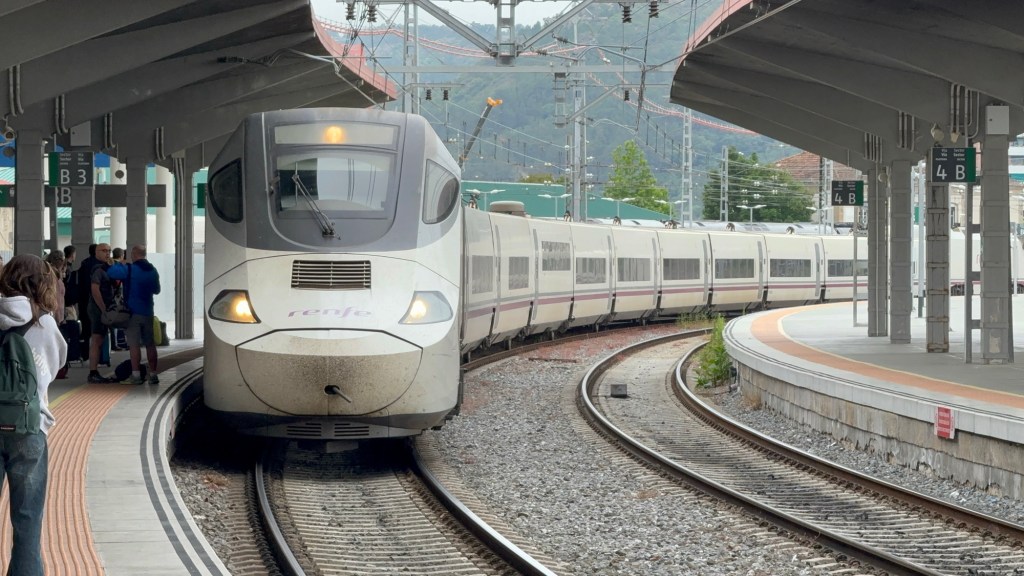
    The train
  • Cathedral to cathedral

    The 114-mile stretch from Fromista to León crosses the Meseta, a flat, unshaded agricultural corridor. It’s boring—endless fields, forgotten towns, nothing to look at. Many pilgrims skip it to avoid the monotony. I came to Europe to hike, so I walked every step.

    The Meseta was tough. No shade, just sun and dust. Towns blended together, each one duller than the last. I pushed through, driven by stubbornness. Seven miles before León, I stopped in Puente Villarente and checked into a hostel. I grabbed my towel and walked back to the Río Porma for a dip. The water was freezing but refreshing after a hot day.

    While drying off, a group of pilgrims in their 30s showed up: Thomas, an engineer from Washington; Maria from Hamburg; Jonathan from Copenhagen; Basel from France; Andy, an engineer from Pennsylvania; and Santiago, a web developer from Spain. We talked for an hour, and they invited me to join them for the walk to León.

    The next morning, we reached León and checked into a parroquial hostel run by nuns. We spent the afternoon wandering, hitting shops and grabbing wine at bars. We planned to eat at a Caribbean restaurant, but it was closed. We ended up at Taco Bell, eating tacos and swapping trail stories.

  • The Sahagún Hostel Blues

    I rolled into Sahagún, with my backpack and my dreams,
    A pilgrim on the Camino, chasing rivers, stars, and streams.
    The hostel smelled of sweat and wine, the bunks were creakin’ loud,
    But I didn’t know the madness waitin’ in that rowdy crowd.


    Oh, Sahagún, you broke my heart, you tore my soul in two,
    With the strangest folks I ever met, and the things they chose to do.
    From the bunkhouse to the barroom, it’s a tale I can’t unpack,
    ‘Cause some fool went and pissed all over my poor ol’ backpack!


    I laid my bag beside my bunk, thought it’d be safe and sound,
    But a guy with bleary eyes and a grin came stumblin’ ‘round.
    He wobbled like a sailor, didn’t aim where he should’ve been,
    And my backpack took the brunt of his late-night liquid sin.


    Oh, Sahagún, you broke my heart, you tore my soul in two,
    With the strangest folks I ever met, and the things they chose to do.
    From the bunkhouse to the barroom, it’s a tale I can’t unpack,
    ‘Cause some fool went and pissed all over my poor ol’ backpack!


    Above me on the upper bunk, the night got even worse,
    A fella thought the dark was his, to satisfy his curse.
    The creakin’ wasn’t just the wood, the rhythm told the tale,
    I prayed for dawn to break the spell, or at least a holy gale.


    Oh, Sahagún, you broke my heart, you tore my soul in two,
    With the strangest folks I ever met, and the things they chose to do.
    From the bunkhouse to the barroom, it’s a tale I can’t unpack,
    ‘Cause some fool went and pissed all over my poor ol’ backpack!


    Down the hall, the night got wild, a scene I can’t unsee,
    Two old men and a young lass, in a tangle, loud and free.
    They laughed and whispered secrets, in the glow of candlelight,
    While I just clutched my soggy bag and prayed for morning’s light.


    Oh, Sahagún, you broke my heart, you tore my soul in two,
    With the strangest folks I ever met, and the things they chose to do.
    From the bunkhouse to the barroom, it’s a tale I can’t unpack,
    ‘Cause some fool went and pissed all over my poor ol’ backpack!


    The Camino’s meant for soul-searchin’, for peace and holy grace,
    But in Sahagún’s old hostel, it’s a different kind of place.
    From the bunkhouse blues to midnight news, it’s chaos through and through,
    I’ll keep walkin’ to Santiago, but this tale’s forever true.


    Oh, Sahagún, you broke my heart, you tore my soul in two,
    With the strangest folks I ever met, and the things they chose to do.
    I’ll wash my bag and say my prayers, but I’ll never quite get back,
    The innocence I lost when they pissed on my poor backpack!


    So here’s to Sahagún, my friends, where madness writes the song,
    I’ll keep on walkin’ westward, but this story lingers long.

  • Almost halfway

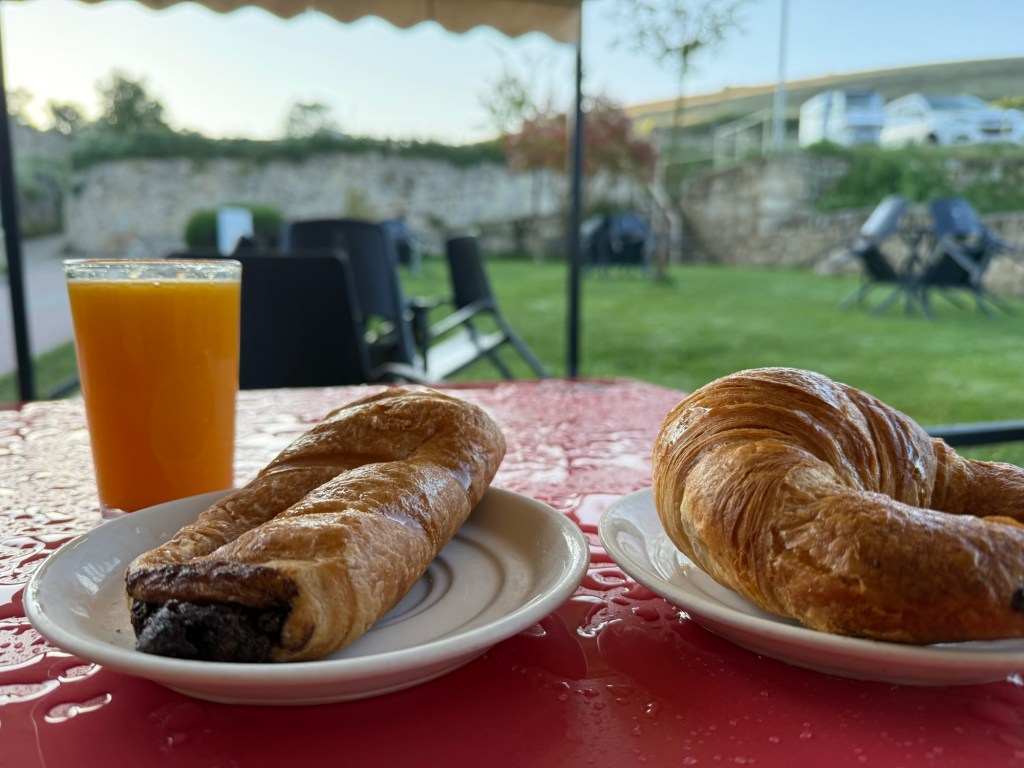
    I woke at 5:30 a.m. About an hour later, I headed downstairs to the mudroom and filled out a transport slip to ship my bag to Frómista, 21 miles west. My shoes, still muddy and wet from yesterday’s rain, were now muddy, wet, and cold. I grabbed my daypack, devoured a pain au chocolat, croissant, and a glass of fresh-squeezed orange juice, and hit the road.

    As I walked through town, the 40-degree streets were shadowed, with no sun to warm them. The air was cold enough that I could see my breath, and I regretted beginning the day in shorts. Once I left town, the sun came around, easing the chill. The first two miles of trail ran beside a one-lane country road. The trail was muddy from the yesterday’s rains, so I walked on the road to keep my the mud from clumping on the soles of my shoes.

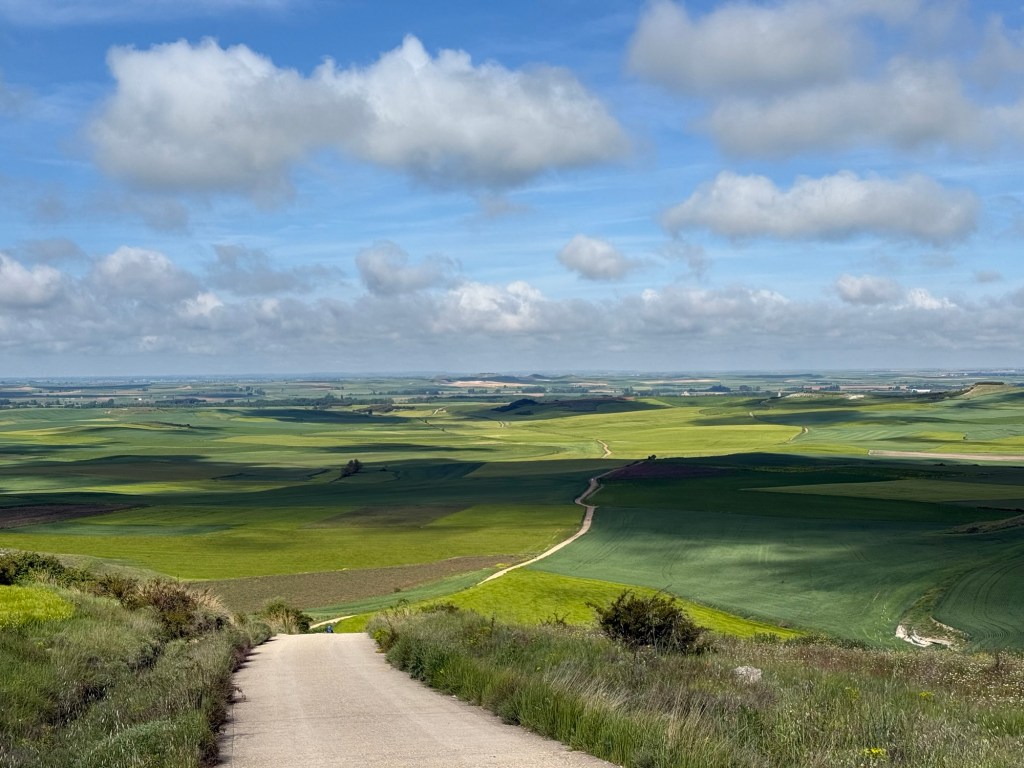
    At the four-mile mark, the road curved right, revealing a large hill topped with a fortress. Beyond it was a 500-foot ridge with a 12.5% grade, the day’s only tough climb. I summited in about ten minutes. The view from the top showed lush green fields stretching endlessly. At the base of the ridge, I checked my hiking app. Only 12 miles remained to Frómista, with no significant climbs left.

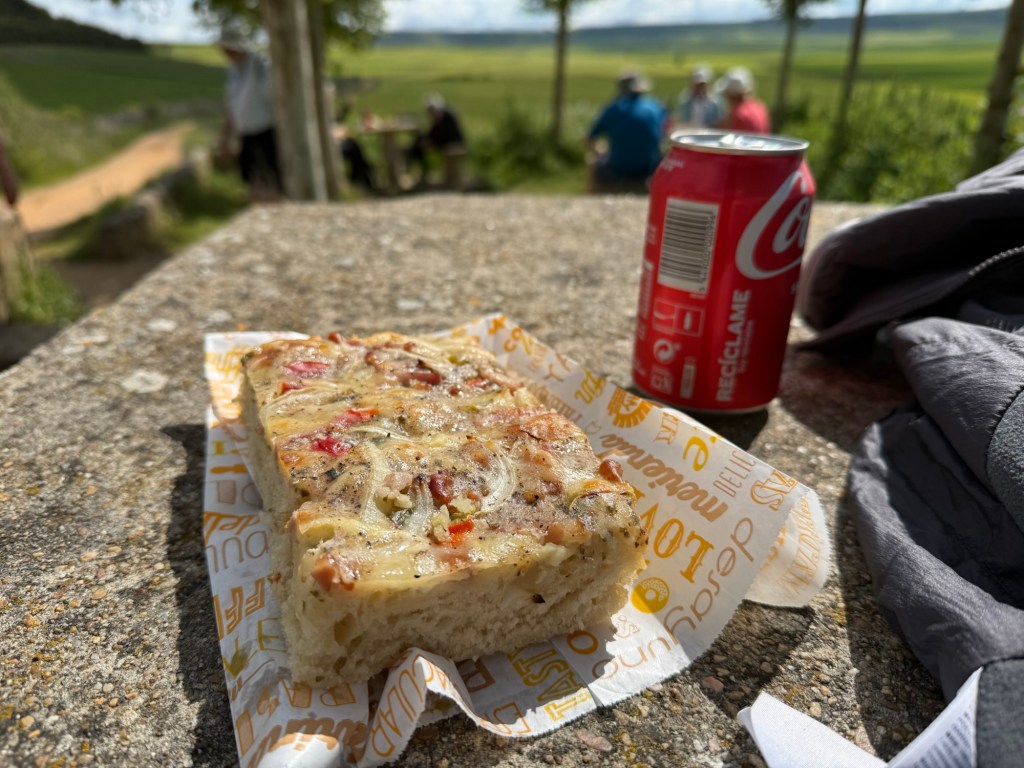
    Around 11:00 AM, a food truck appeared. I bought a slice of ham and onion Sicilian pizza and a Coke for €6.50.

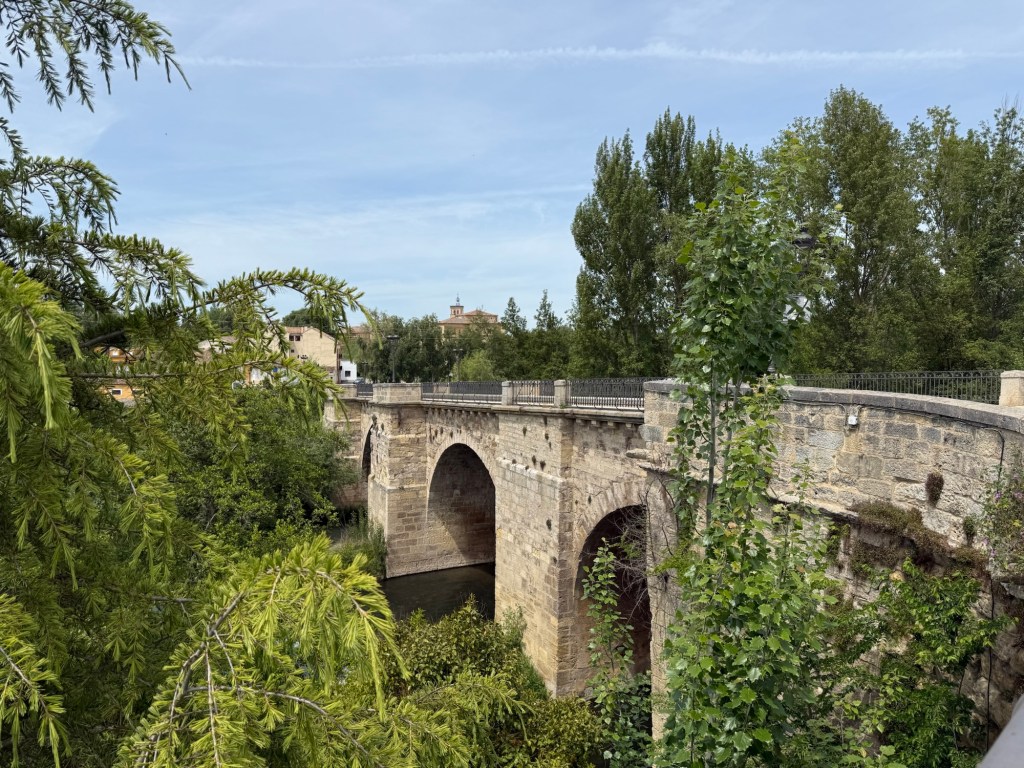
    At the twelve-mile mark, I crossed the Río Pisuerga on an eleven-arch bridge. The bridge, known as Puente de Itero del Castillo, dates to the 11th century.

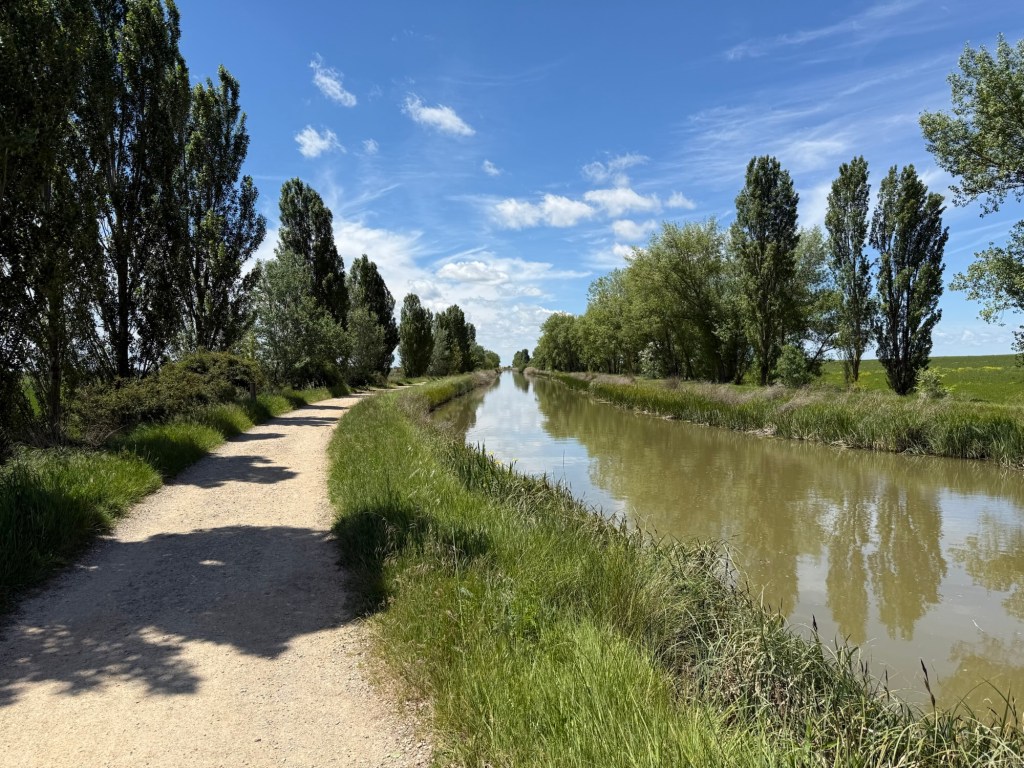
    The final five miles of the day followed the towpath of an old transportation canal. The locks at Frómista were replaced with a dam, suggesting the canal’s main use now is irrigation. A novelty canal boat runs along the corridor a couple of times a day, but waiting two hours to skip a five-mile walk didn’t seem worth it. I kept walking.

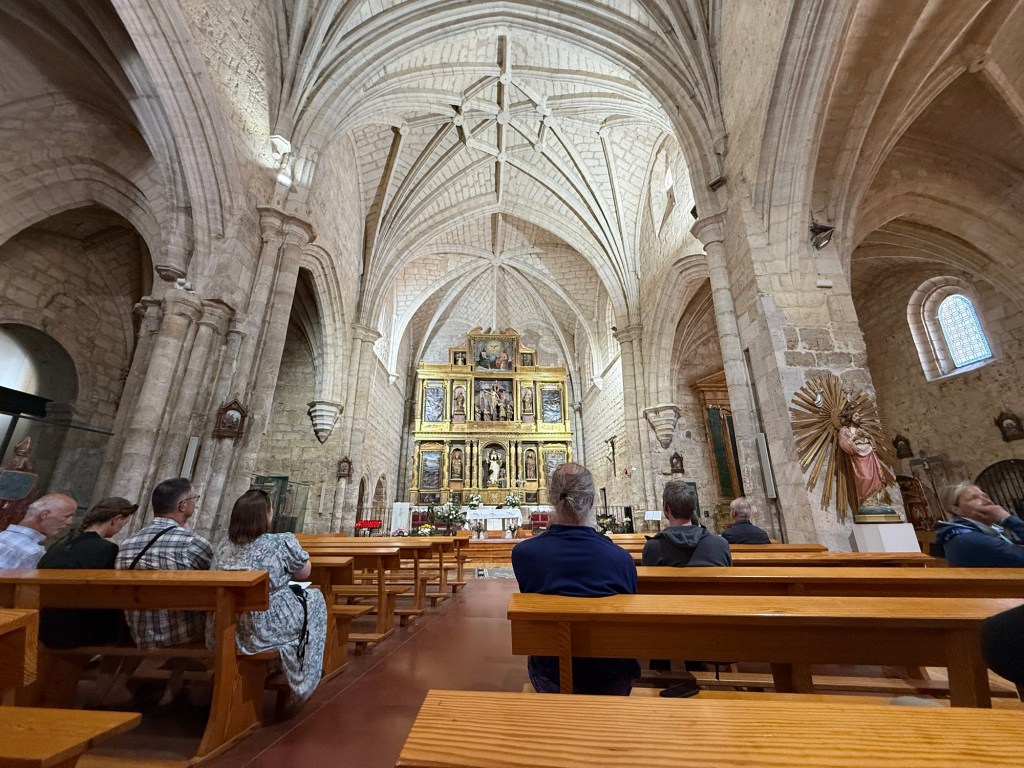
    I checked into the municipal hostel in Frómista around 4 p.m. I went to the local grocery store and bought a can of Pringles. While snacking on the bench out front, a guy, Craig, introduced himself and asked to sit down. Craig is a university professor from Indiana and a former Army infantry officer. After some conversation, I pointed to a poster on a pole nearby. It advertised an organ and Gregorian chant concert at 6 p.m. at one of the churches in town. Craig was interested, so we walked over and sat through the performance.

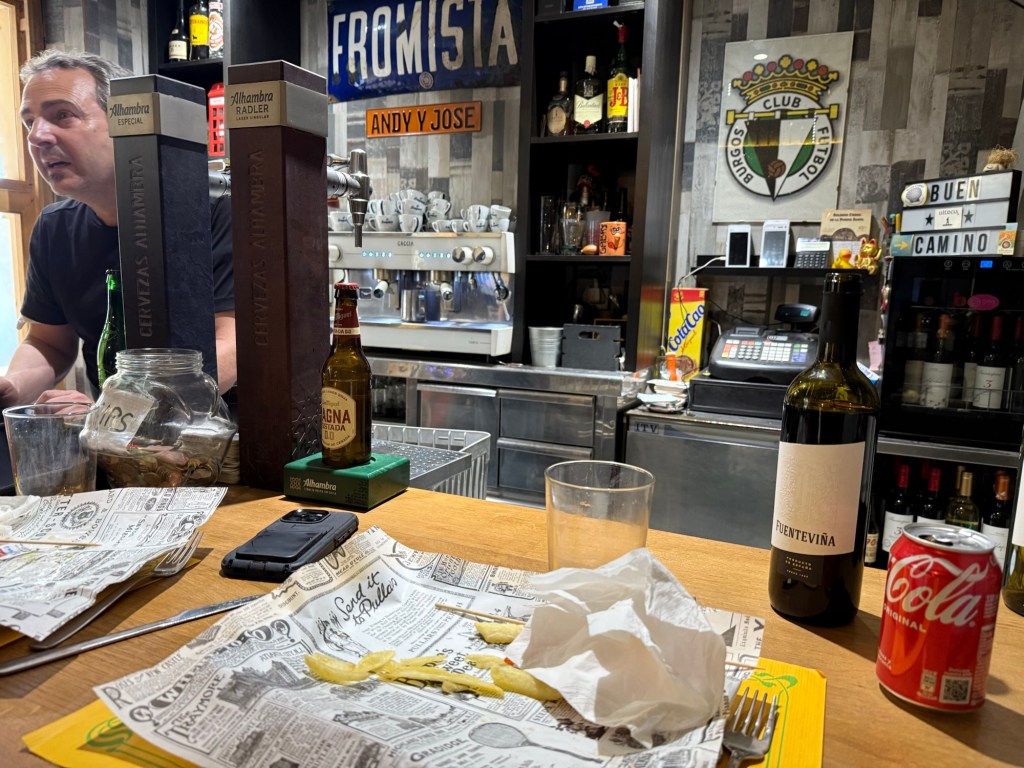
    After the concert, we crossed the street to a restaurant for burgers and fries. We spent three hours talking about the future of U.S. foreign policy and imagining how much generative AI would change the world. At 9:30 p.m., we walked back to the hostel for the night.

  • Spa day

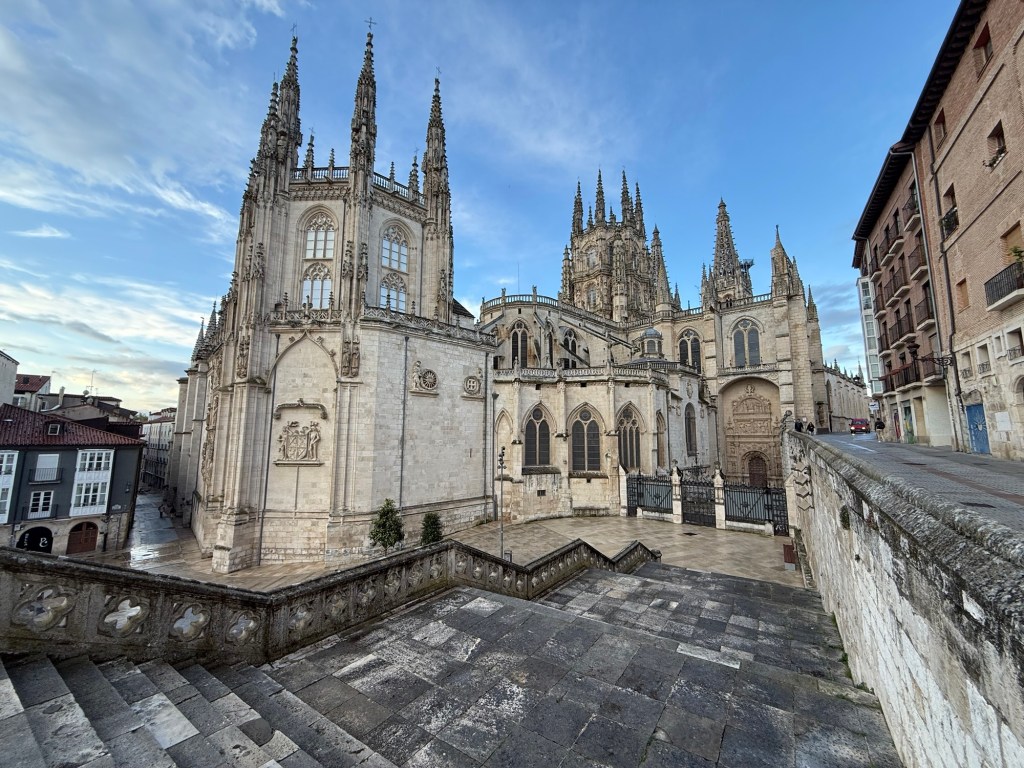
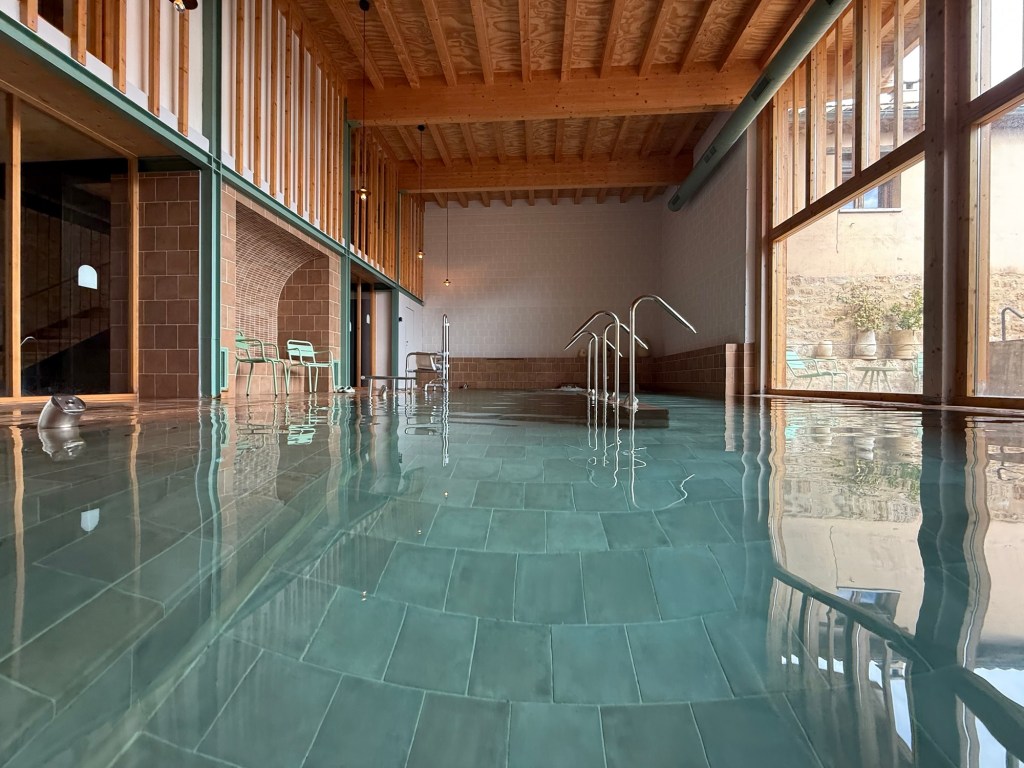
    I woke up at 6:45 in Burgos and studied my map. I decided on Hontanas, 19.6 miles west. There’s a nice hostel there for €15—and for another €15— access to a heated pool with massage jets, and a steam room. It sounded far better than any $30 budget motel I’ve stayed in. I left town around 8:20, passing the Burgos Cathedral and shuttered shops while cafes were jammed packed with pilgrims.

    Burgos Cathedral

    The weather was perfect for my sunburned skin: overcast skies blocked the sun without threatening rain, and temperatures stayed around 60°F.

    Good weather on the way out of town.

    After seven miles, I reached Tardajos and stopped at a pharmacy to buy sunscreen. There, I met Michael, an Australian who owns an 8,000-acre farm near Perth. He and his friends hike a new trail each year, and this time they chose the Camino. I picked his brain about the Bibbulmun Track, a 650-mile trail in southwest Australia that runs from Perth down and around the southwest coast to Albany. He assured me that emus and kangaroos aren’t threats to humans, crocodiles stick to the north, and snakes are rarely aggressive. Great white sharks, he added, will kill you, but attacks are uncommon. I forgot to ask about dingoes.

    Six miles later, around noon, we arrived in Hornillos. A brief rain shower ensued, sending pilgrims into shops and albergues along the main street. Michael and most others opted to stay, but the spa in Hontanas kept me moving.

    Overcast skies over Hornillos

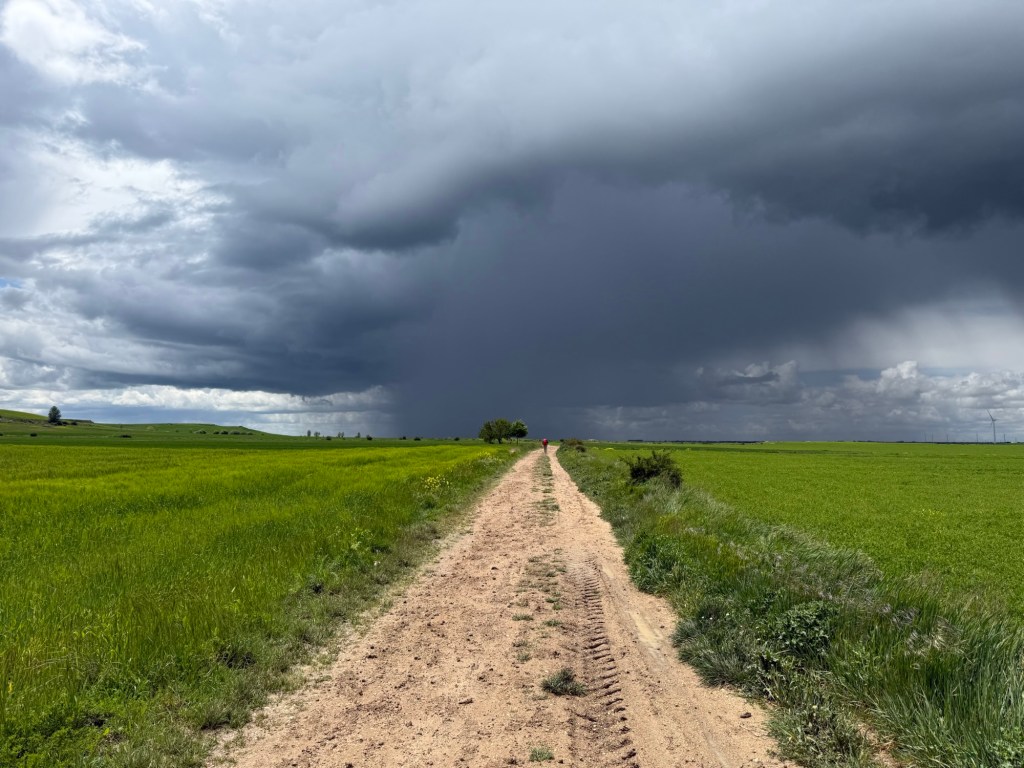
    The final six miles brought two short storms—cold rain mixed with light hail. Each time, I pulled on my poncho, only to stow it when the skies cleared.

    I was hit by two isolated storms between Hornillos and Hontanas

    I reached Hontanas by 3 p.m., checked into the Santa Brigida albergue, and headed straight for the pool.

    The Santa Brigida Spa in Hontanas

    On the menu for the evening was paella, so I grabbed a bocadillo, chips, and a KitKat from the bar instead, called it a meal, and settled in for the night.

  • The edge of consciousness

    I rolled out of bed at 6:45, piecing together another night of broken sleep. Today was my longest yet—23 miles from Villafranca to Burgos, with my bag tagged for transport to ease the load. The forecast called for upper 70s, the warmest day so far. Two climbs were waiting: a 200-meter haul right out of Villafranca and a 175-meter climb out of Atapuerca, 12 miles in.

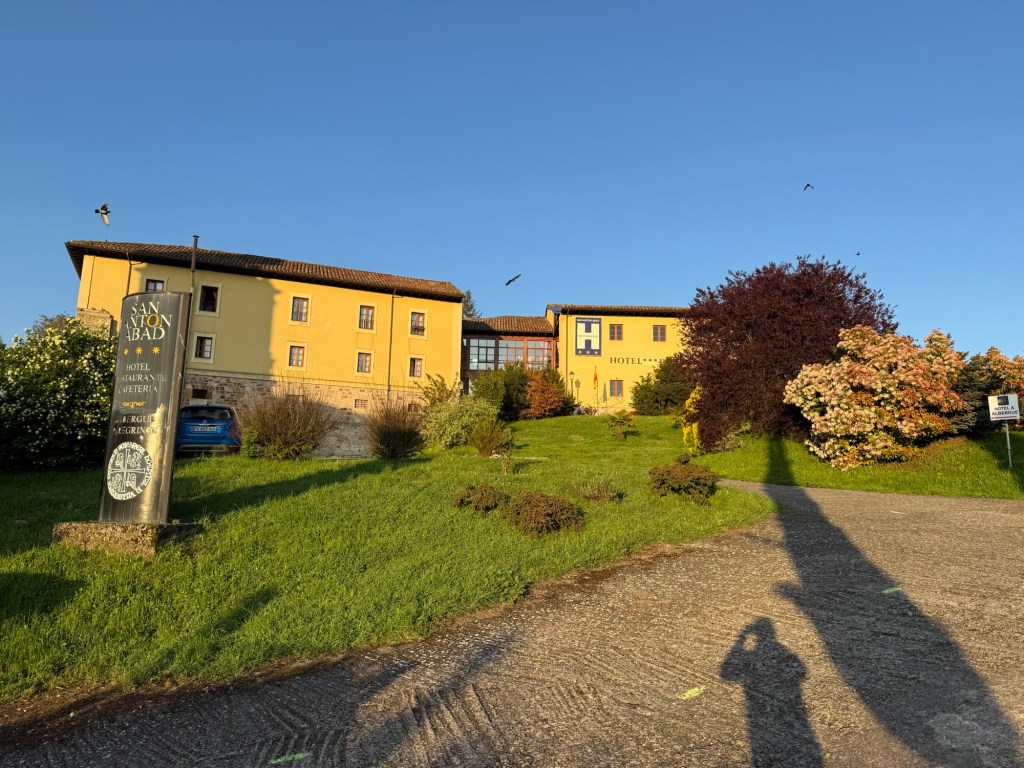
    A look back on the San Anton Abad albergue before the first climb.

    That first hill hit like a sledgehammer. I powered up without a break, legs screaming. From there, it was a 10-mile downhill cruise to Atapuerca. My sunburned calves burned under my pants, the skin-tight fabric absorbing heat. I taped a washcloth to my left calf to block the sun’s sting and kept moving.

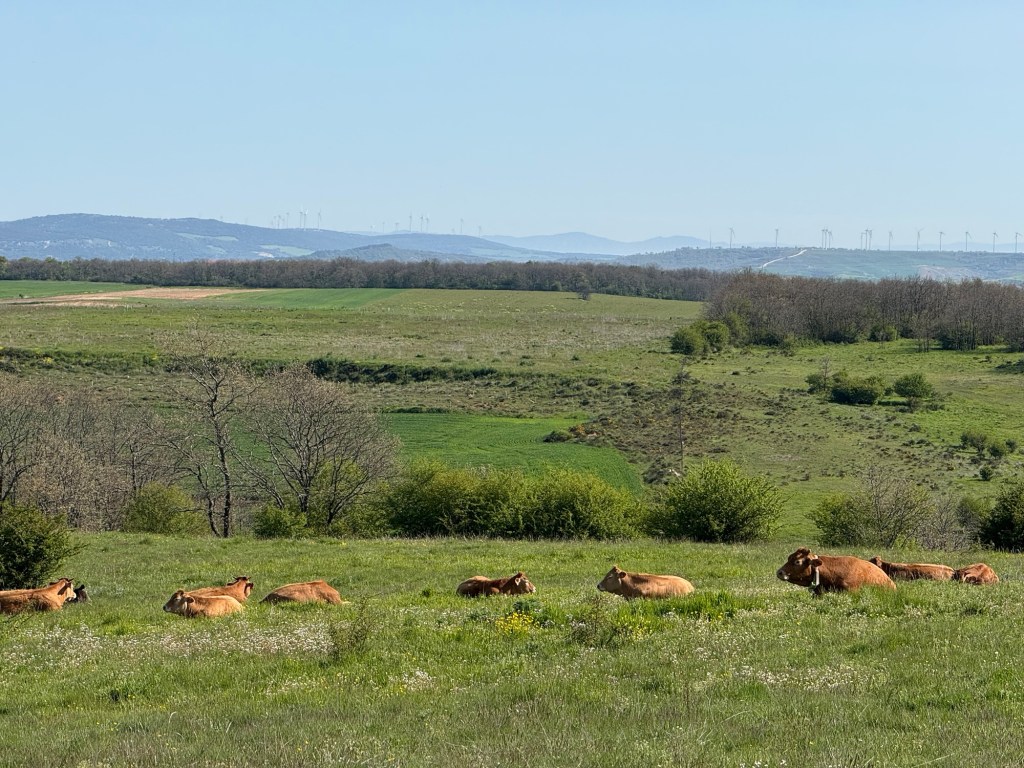
    Less intimidating cows from my run in with the bulls a few days back.

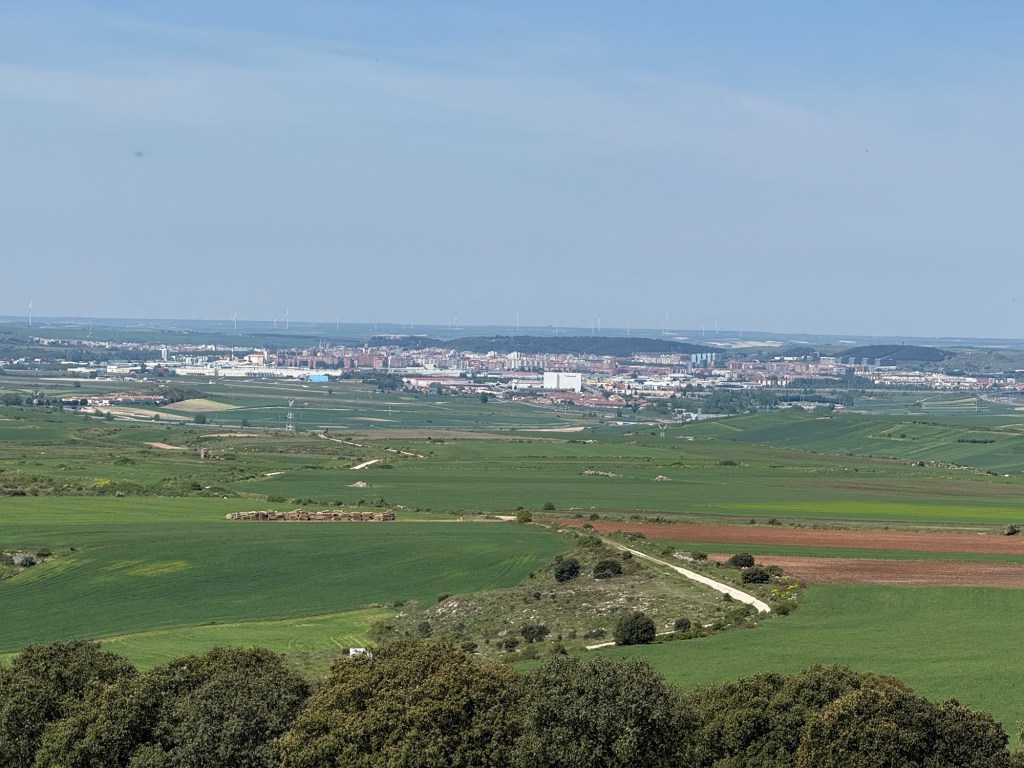
    In Atapuerca, I stopped for water and a quick rest, then tackled the second climb. Reaching the plateau, Burgos sprawled in the distance, and beyond it, the meseta—endless, flat farmland stretching into the haze 115 miles to Leon.

    Today marked the end of the Camino’s hilly first third. From here, part two begins, and that wide-open view, with little to no cover, was my first taste of it.

    Burgos and the Meseta beyond.

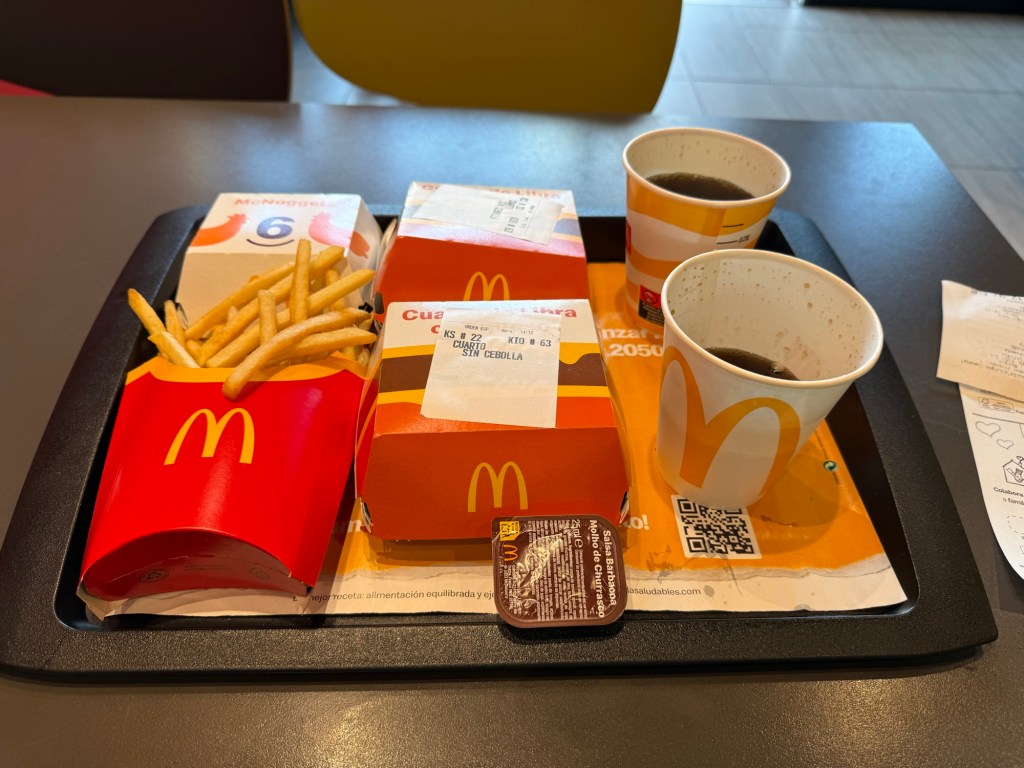
    The 10-mile descent to Burgos had a McDonald’s along the way. Seven hours and 21 miles in, the heat was brutal. I staggered into the restaurant, craving AC, but got hit with warm air instead. I ordered at a kiosk, but as I finished, the world began to spin. Exhaustion nearly dropped me. No hospital for me—I sank into a booth, willing myself to stay conscious.

    Food came quick. I chugged a Coke Zero, the cold yanking me back from the edge. I stayed there an hour, rounding out a quarter-pounder meal with a KitKat McFlurry that felt like heaven.

    This will be a memorable meal.

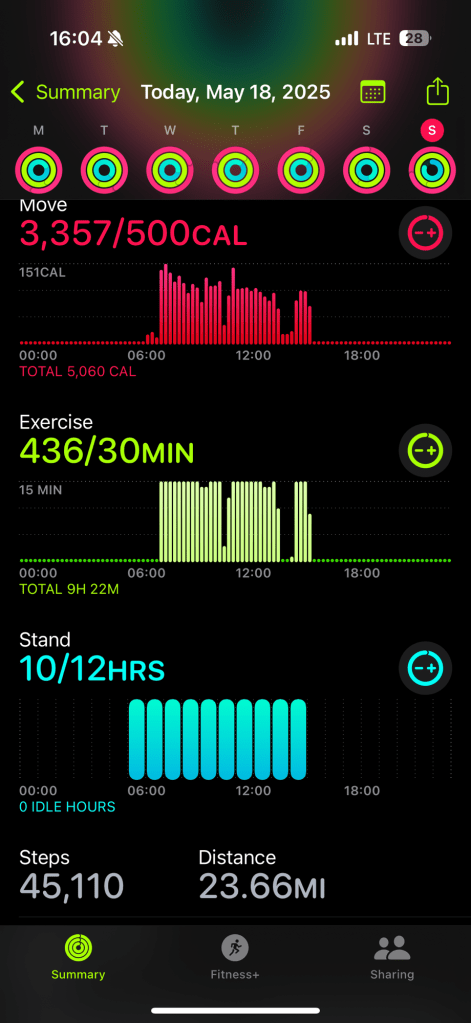
    A bus for the last two miles tempted me, but stubbornness won. The 50-minute walk to the hostel had me overheating again. When I arrived, air conditioning was my savior. The desk clerk, sensing my discomfort, led me to the elevator, and on the fifth floor, I located my pack, threw paper sheets on the mattress, and crashed. My body continued to dump heat for nearly an hour. Once cooled, I showered and hit a Burger King, ravenous after a 6,000-calorie day.

    Pain and suffering.
  • “Who’s the most famous artist from Vienna?”

    After a night of fitful sleep, I left Santo Domingo de Calzada just after 8 a.m. I hiked with Bill until lunch, engrossed in stories about his father, who flew missions for the Army Air Forces over Normandy on D-Day.

    We stopped for lunch in Villamayor del Río. Bill sipped a café con leche while I devoured a Coke and a chorizo-and-cheese bocadillo. Eager to tackle some chores before check-in at Belorado, Bill set off early. About 30 minutes into my solo trek, I ran into Alex and his Hungarian friend Sylvie. We walked together for seven miles to Tosantos, where they stopped for the day.

    Lunch with Bill

    I pressed on alone for another 4.5 miles to Villafranca Montes de Oca, where my bag was waiting. At 21 miles, it was the longest day of my trip—a real grind with more of the same landscapes. I’m pushing to boost my daily mileage average to ensure I can hit all the treks on my itinerary. A 20-mile-per-day pace should let me cover everything with about 10 rest days.

    The trail leaving Grañón

    I’ve got some mild sunburn on the back of my calves, but wearing long pants for the next few days should mitigate any problems.

    At the hostel in Villafranca, I dined with a budget analyst around my age, recently laid off from the FDA after 17 years. His entire division was cut, and with insufficient government tenure, he missed out on a buyout. We swapped stories, bonding over the unexpected turns life sometimes throws.

    The view before descending to Villafranca Montes de Oca
  • Grit, Views, and Marine Stories

    The day began with a jolt from my alarm at 7 a.m., after a restless night. I barely slept, awake from midnight until 4 a.m., my mind refusing to quiet. To ease the burden of the 20-mile trek to Santo Domingo, I arranged for my bag to be transported ahead. The landscape of the Camino Frances has become familiar by now—endless wheat fields, orderly vineyards, and scattered wildflowers. It’s beautiful, no question, but after eleven days, the repetition wears thin. As a seasoned hiker, I’ve come to expect this shift; the trail is less about novelty and more about the steady rhythm of movement and the views that unfold. I walk for the physical challenge and the chance to take in the scenery, not for some grand epiphany.

    The trail leaving Ventosa

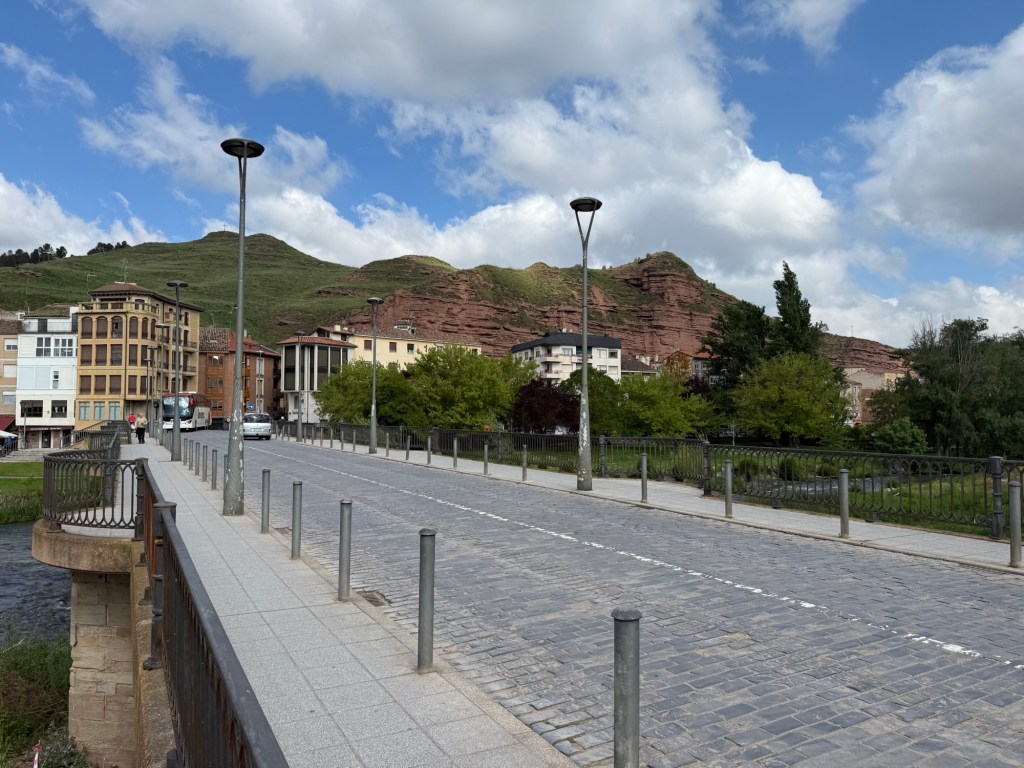
    Around six miles into the day, I arrived in Nájera, a town that always feels like a reward. The river cuts through its center, reflecting the red cliffs that tower in the background. I stopped at a small grocery store to pick up a bag of chips and a cold Heineken, a small treat to break up the morning. I’ve stayed in Nájera twice before, drawn to the municipal hostel right on the riverbank, its setting hard to beat. The town carries a deep history, dating back to the 10th century when it served as a key seat for the kings of Navarre. The Monastery of Santa María la Real, with its royal tombs and Gothic cloisters, stands as a reminder of that era.

    Najera

    Leaving Nájera, the path climbed steeply until it leveled out onto a plateau of vineyards, their green rows stretching into the distance. In Azofra, I stopped into a store for another beer before continuing to Cirueña. I remembered Cirueña from my 2014 hike—a failed golf course community, a casualty of the 2008 recession. Now, nearly 20 years old, it’s showing its age. The houses, now mostly occupied, stand in eerie silence during the day, the infrastructure crying out for a pressure washer and some landscape work. All these years later and it still feels like a ghost town.

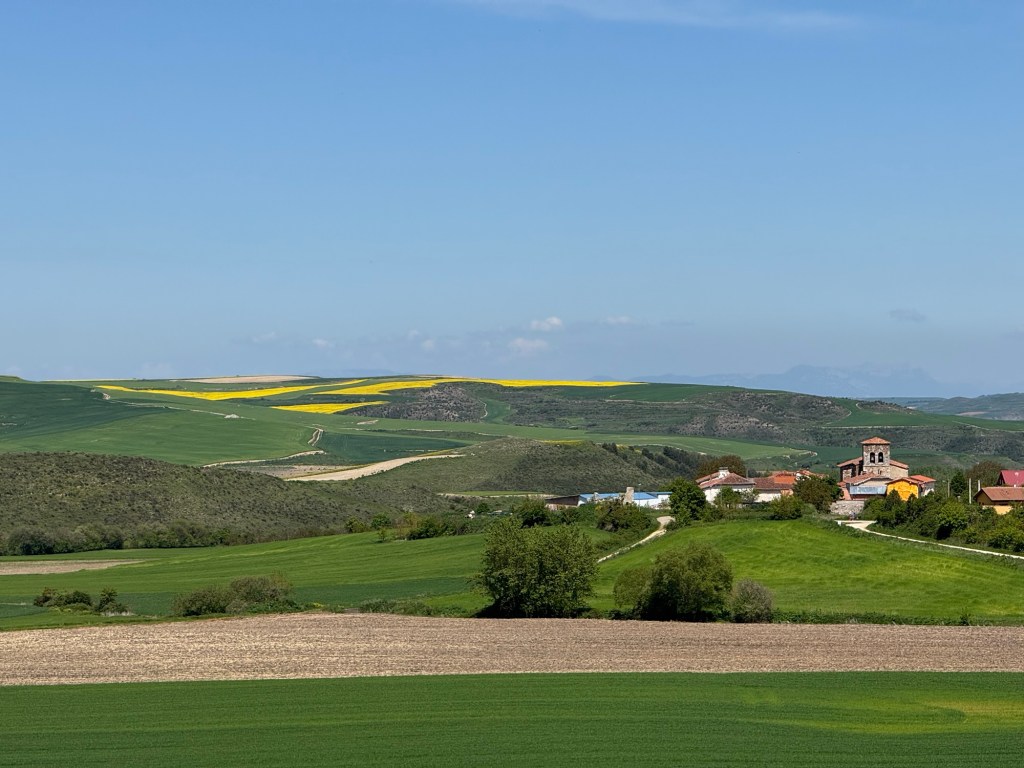
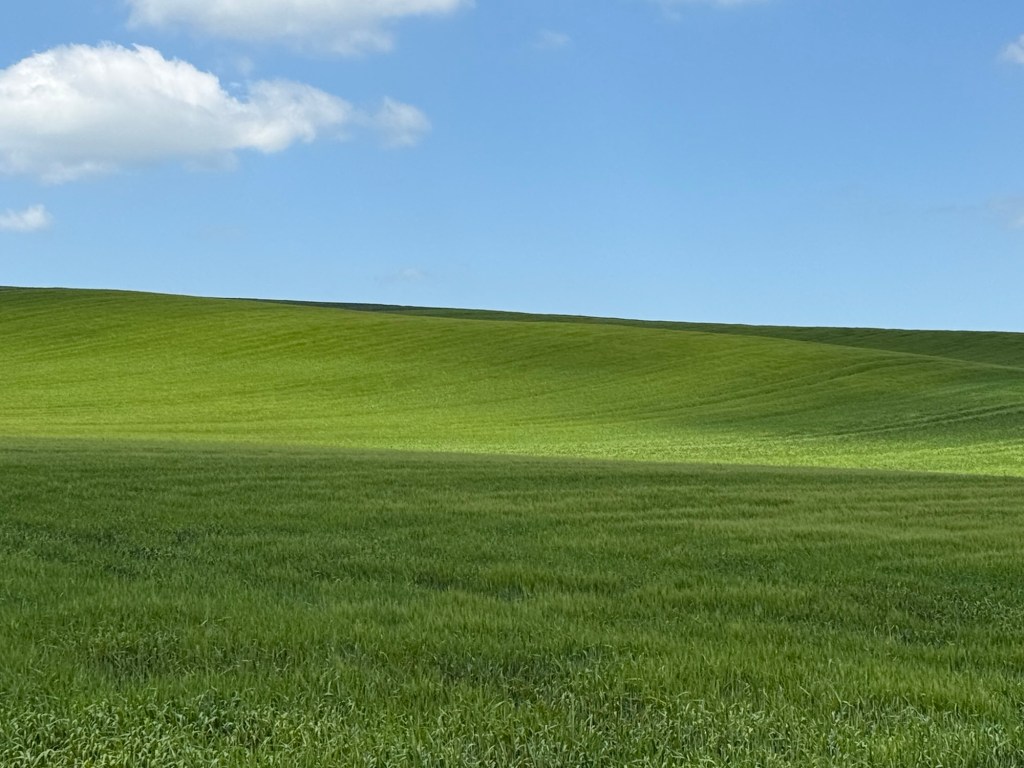
    The stretch from Cirueña to Santo Domingo was the highlight of the day. Vast wheat fields, their green tips swaying in the breeze, blended into vineyards that seemed to roll on forever. The scene was so perfectly pastoral—gentle hills under a wide sky—that I half-expected to see the Windows XP logo in the corner.

    The landscape after Cirueña

    I reached Santo Domingo just after 3 p.m. While looking for my hostel, I walked past a café and ran into Alex, who introduced me to Bill, a man from Houston with a firm handshake. I checked into my hostel, dropped my gear, and returned to the café for an early dinner: spaghetti carbonara, meatballs, a glass of Rioja wine, and a slice of apple pie.

    Over dinner, I learned that Bill was also a Marine. He served as an artillery officer in the post-Vietnam era and spent time at 29 Palms, a place I know well. We traded stories from our time in the Corps, laughing at the quirks of military life that haven’t changed in the 30 years between our service. His son, a colonel select and also an artilleryman, carries on the family tradition.

    Alex and Bill later went to visit the cathedral, built by Santo Domingo de la Calzada, a saint known for constructing bridges and hospitals for pilgrims. I opted to rest but made plans with Bill to meet at 8 a.m. tomorrow to walk to Belorado together. From there, I’ll push on another seven miles to Villafranca.

    I’m betting these two get lots of pets.
  • Ventosa

    What’s the trick to getting back-to-back nights of solid eight-hour sleep? Wrecking yourself with 18-mile days. Already on a roll, I checked my map and picked Ventosa, a small village another 18 miles out. I reserved a room at the San Saturnino Hostel, a place with great reviews that has a real washer and dryer—the first time I wouldn’t be washing my clothes in a sink this trip. I dropped six euros in an envelope for bag transport, so I could hike with just my daypack.

    At 7:10 a.m., I left the hostel. Viana was gorgeous, and I kicked myself for not exploring more yesterday. Once out of town, northern Spain’s green hills took over, with a light drizzle and cloudy skies.

    Leaving Viana

    Over seven miles, the farmland shifted to an industrial area. Eventually a park marked the entrance to Logroño. I crossed the city, stopping at a big church and a supermarket for food: a bag of rolls, a stick of butter, and strawberry jam. Leaving Logroño, the path hugged a large reservoir before veering toward Navarrete.

    The main church in Logrono
    Reservoir Ducks

    I reached Navarrete just after noon and popped into the church during communion.

    When I arrived at the hostel in Ventosa, I showered, took a quick call from my boss, finished off the rest of the rolls, and did a load of laundry.

    Since I’m moving at a fast clip now, I’m seeing a new set of people each day. Unfortunately, if I want to keep to my schedule, I just don’t have the time to spend 35 days on this trail.

  • “Knock three times, and ask for El Toro!”

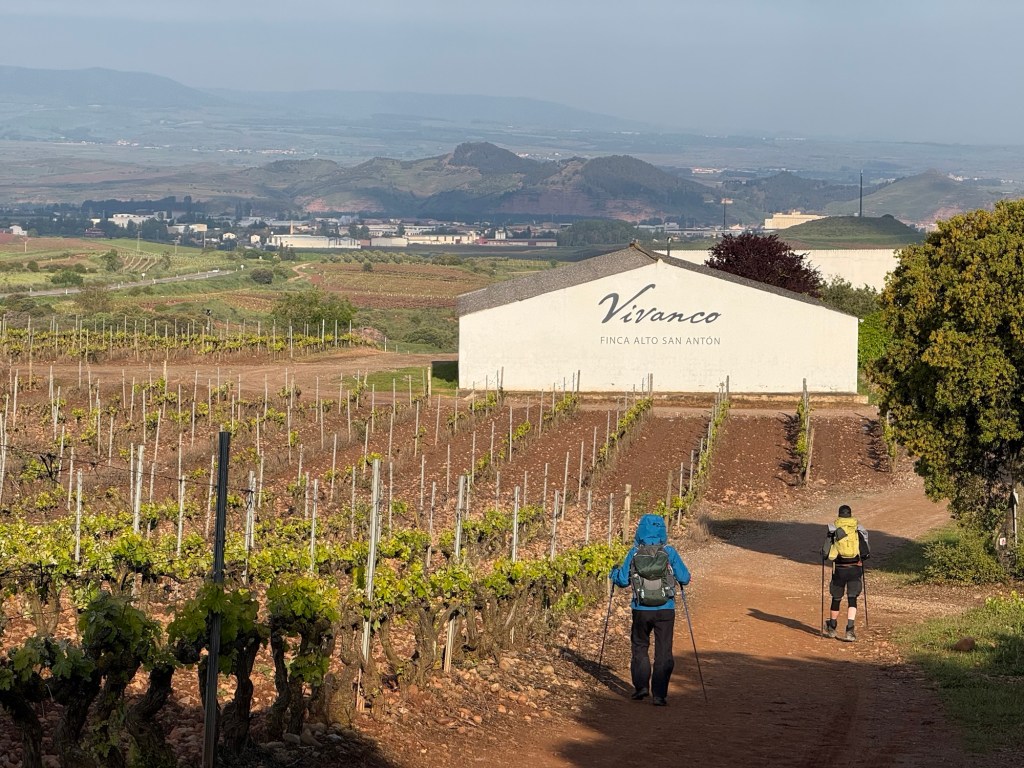
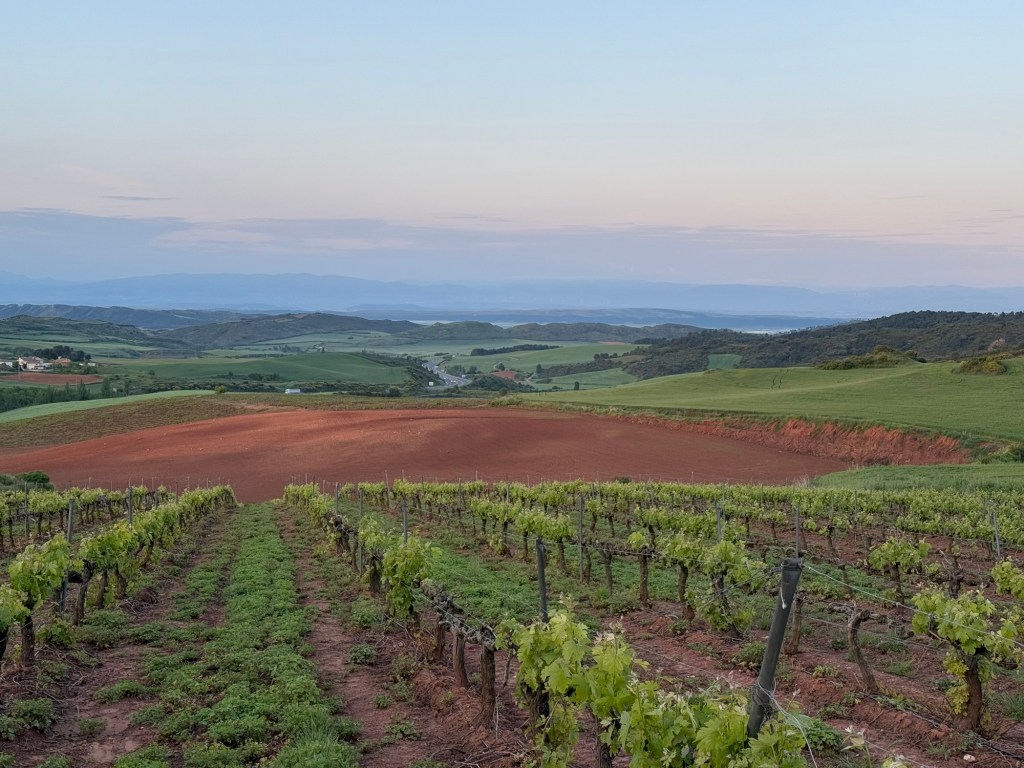
    After a blissful eight hours of uninterrupted sleep—a first for this trip—I left the hostel in Villamayor just as the sun peeked over the horizon. The path ahead, winding through vineyards and framed by rolling hills, glowed in the morning light.

    Leaving Villamayor de Monjardin

    By 9:30 a.m., I’d covered seven miles to Los Arcos, where I ran into Alden and Grant. The local church, one of my favorite stops on the Camino, opened at noon, but it was too long a wait to consider sticking around. The brothers ordered breakfast at a café in the square, and I joined them for more great conversation. Alden walked me through an assortment of itineraries in the Himalayas and quelled my fears about hiking Tour du Mont Blanc without lodging reservations. We parted ways at about 10:30 a.m.

    Los Arcos’ church is probably the best example of Baroque design on the entire Camino. Not one square inch of the walls is bare.

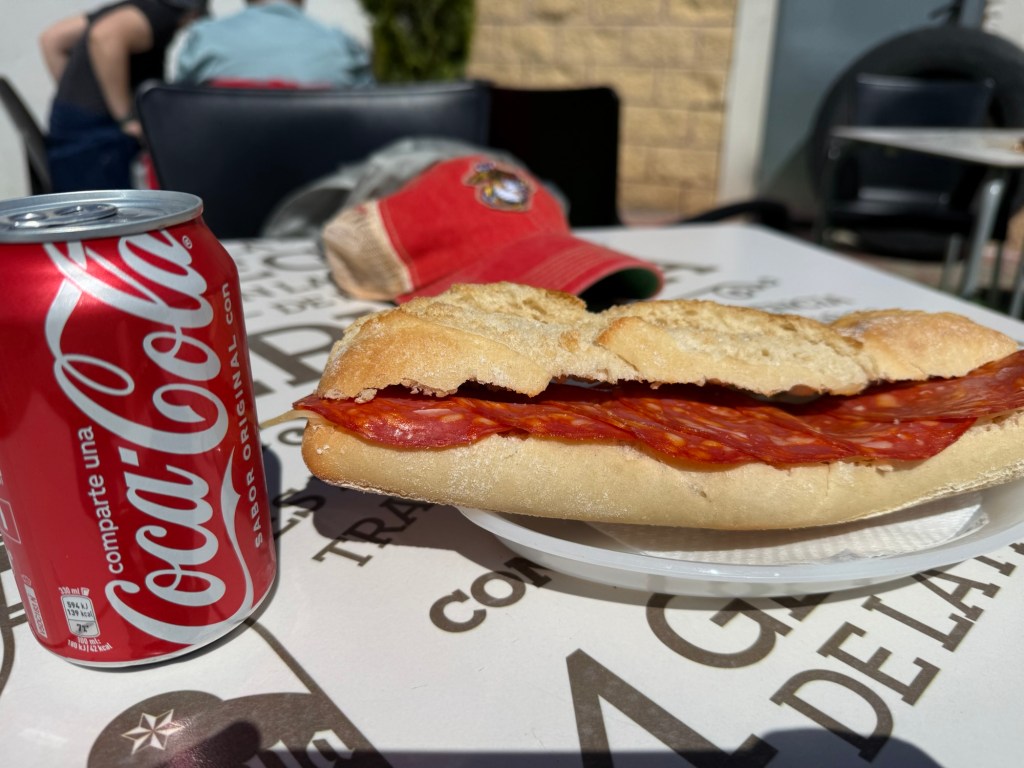
    Pushing on, I reached Torres del Río and found a small café. After my 42-hour fast, I broke it with a ham, cheese, and tomato bocadillo, slathered with olive oil. With only €3.70 in my pocket and the sandwich costing €3.50, it was pure luck I could eat—Torres del Río has no ATMs, and no one takes cards.

    Bocadillo in Torres del Rio

    The next seven miles to Viana were a slog. The trail rose and fell relentlessly with the rolling hills all afternoon. I arrived in Viana around 3 PM and checked into a €15 albergue, buzzing with Italian bicyclists. With little to do in Viana, I hopped a bus to Logroño to find an ATM and some dinner.

    ‘Merica